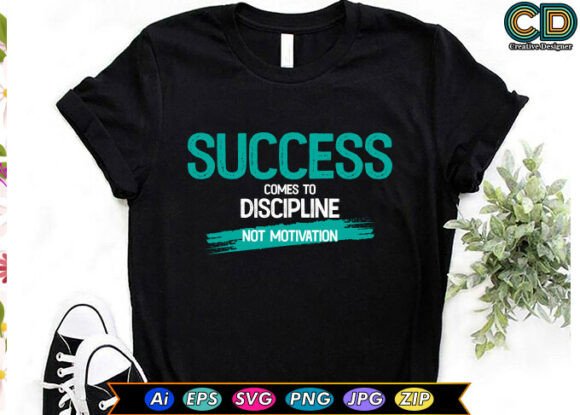
Success Comes to Discipline Not Motivation
The phrase Success Comes to Discipline Not Motivation has become a quiet anthem for creators, entrepreneurs, and designers who understand that consistency beats inspiration every time. While motivation is fleeting—here one morning, gone the next—discipline is the steady hand that turns intentions into finished work. This idea resonates deeply with anyone who has ever stared at a blank canvas, an empty shop page, or a stalled project, waiting for the spark to strike. The truth is that waiting is optional. Discipline is what closes the gap between wanting to create and actually creating.
For designers, small business owners, and content creators, this message is more than a quote. It is a practical philosophy. It shows up in the daily decisions to keep working when no one is watching, to refine a design for the tenth time, and to show up for the work even when the excitement fades. The phrase has found a natural home across merchandise, digital products, and branding projects because it speaks directly to the audience that values effort over impulse.
What Makes This Phrase So Useful for Creative Projects
The power of Success Comes to Discipline Not Motivation lies in its universal relevance. Whether you are making a motivational T-shirt design for an online store, creating a printable wall art set for Etsy, or building a branding package for a coaching business, this phrase works because it is honest. It does not promise overnight success. It promises results for those who put in the work. That distinction matters to people who are tired of hollow hype and want something they can actually stand behind.
From a design perspective, the message also offers flexibility. The contrast between discipline and motivation allows for visual storytelling. You can emphasize the calm strength of routine over the flash of inspiration. That duality opens up countless artistic directions, from minimalist typography to bold, gritty layouts. The phrase itself is long enough to create rhythm in a composition but short enough to remain readable on a T-shirt or a sticker.
Creative Applications Across Formats and Products
One of the most exciting aspects of this design is how well it translates across formats. The original package includes high-quality JPG, editable AI, SVG, EPS, and transparent PNG files, all delivered in a single ZIP folder. At 4500×5400 pixels with 300 DPI, the file size supports large prints on apparel, signage, and wall art without any loss of sharpness. Here are some of the most effective ways to use it.
T-Shirt and Apparel Designs
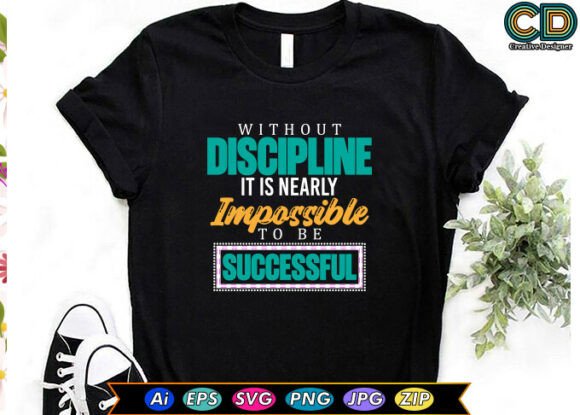
Motivational T-shirt designs continue to perform well across print-on-demand platforms, and this phrase fits the niche perfectly. The layout can sit centered on a crewneck sweater, run vertically along a hoodie zip, or wrap around a raglan sleeve. Because the message is grounded rather than preachy, it appeals to men and women in the 20 to 50 age range who identify as builders, freelancers, or side hustlers. Pairing the typography with subtle distressed textures or a clean sans-serif treatment can shift the tone from industrial to modern.
Stickers, Decals, and Labels
Stickers are a low-cost entry point for testing a design's market appeal. With the transparent PNG file, you can place Success Comes to Discipline Not Motivation on laptop lids, water bottles, journals, and car windows. The 300 DPI resolution ensures crisp edges even at smaller sizes. For decals, consider splitting the phrase into two lines so that the visual weight lands on "Discipline." That emphasis reinforces the core message and makes the sticker more readable from a distance.
Mugs, Bags, and Home Goods
Ceramic mugs, canvas tote bags, and throw pillows benefit from a centered, high-contrast layout because these items are often viewed at a glance. The editable AI and EPS files let you adjust the color palette to match a specific aesthetic—neutral earth tones for a lifestyle brand, high-contrast black and white for a minimalist studio, or vibrant accents for an audience that wants energy without fluff. Because the message is already strong, you can keep the surrounding design simple and let the words carry the weight.
Posters and Wall Art
At 4500×5400 pixels, the design is ready for printing at poster sizes up to 15 by 18 inches without interpolation issues. For wall art, consider adding a subtle background texture or a muted color block behind the typography to give the piece a physical depth that works well in a home office or a creative studio. This is especially effective for entrepreneurs and freelancers who want their workspace to remind them why they keep going.
How Different Creators Can Adapt the Design
One of the strongest reasons to use this design is its adaptability across different creative roles. Below are a few ways specific audiences can make it their own.
For Print-on-Demand Sellers and Marketers
If you are running a T-shirt shop on platforms like Redbubble, Teespring, or Printful, this design belongs in your motivational category. To differentiate it from similar listings, test different font combinations and layout positions. You can also create variations that pair the phrase with subtle line art, such as a gear, a compass, or a simple flame. Because the ZIP folder includes an editable AI file, you can make these adjustments without losing the original quality. Keep the product description grounded too. Instead of promising instant success, talk about how the message supports daily effort. Audiences trust brands that match their tone, and this phrase naturally attracts people who value perseverance over shortcuts.
For Graphic Designers and Typography Enthusiasts
For designers, this phrase offers a chance to experiment with type hierarchy. You might place "Discipline" in a bold, heavy weight while "Motivation" sits in a lighter, almost faded style. That visual contrast tells the same story as the text itself. The editable EPS and SVG files allow you to strip back the design and rebuild it from the ground up, which is perfect for creating a cohesive series of motivational quote T-shirt designs. Consider building a three-piece bundle where each design explores a different aspect of the same idea. That kind of focused collection tends to sell better than scattered one-offs because it gives buyers a reason to purchase more than once.
For Entrepreneurs and Small Business Owners
If you run a coaching practice, a fitness brand, or a creative agency, this design can become part of your merchandise or your studio decor. Placing the phrase on a canvas tote or a notebook that you give to clients reinforces your brand values without feeling salesy. You can also use the transparent PNG file to overlay the quote onto client-facing materials like presentation slides or email footers. The consistency of that visual message builds recognition over time, and recognition builds trust.
For Educators and Hobbyists
Teachers, workshop leaders, and hobbyists can use this design as a conversation starter. Print it on a poster for a classroom wall, use it as a slide background during a talk on creative habits, or add it to a resource packet. The message is straightforward enough to bridge different contexts and respectful enough that it does not alienate anyone who is still building their own discipline. For hobbyists working with sublimation, the transparent file makes it easy to transfer onto polyester fabrics, mugs, and ceramic tiles without background bleed.
Practical Tips for Keeping Your Designs Effective
Even the strongest message loses impact if the execution is cluttered. Here are some practical guidelines to ensure your designs stay clear, professional, and audience-friendly.
- Prioritize readability. Because the phrase is relatively long, avoid decorative scripts or condensed fonts that force the letters to squeeze together. A clean sans-serif or a bold slab serif works best for T-shirts and decals where legibility matters at a distance.
- Use contrast intentionally. If you place the design on a dark background, use a light color for the type, and vice versa. This is not just about aesthetics. It affects how quickly a viewer absorbs the message. High contrast also helps the design perform better in thumbnail views on online marketplaces.
- Limit additional graphics. The message itself is the visual centerpiece. Adding icons, borders, or illustrations can distract from the words unless they directly reinforce the theme of discipline, such as a simple line drawing of a chain or a steady hand. When in doubt, remove rather than add.
- Test your mockups. Before listing a design, place it on a mockup of the actual product. A phrase that looks balanced on a flat screen can feel heavy or off-center on a T-shirt. Use the editable files to adjust sizing, spacing, or alignment for each format.
- Stay consistent with your brand. If you sell multiple motivational quote T-shirt designs, keep the typography style and color palette consistent across the collection. This makes your shop look curated and intentional, which encourages repeat visits and multiple purchases.
Realistic Examples of This Design in Action
Consider a seller who runs a small print-on-demand shop focused on creative professionals. They take the transparent PNG file and place Success Comes to Discipline Not Motivation on a dark heather hoodie with matte white type. The product page shows a model working at a desk, not posing in a gym. That context signals to the buyer that this design belongs in their daily workflow, not just their weekend wardrobe. The result is a product that feels specific rather than generic, and specific products attract buyers who are looking for something that fits their identity.
Another example involves a designer building a bundle of three typography posters for home offices. The first poster features the full phrase with a bold serif font on a warm gray background. The second poster focuses on the word "Discipline" alone, set large enough to become the room's focal point. The third poster strips back to the contrast itself: "Discipline / Motivation" stacked in two different weights. Together, the three pieces tell a complete story, and the bundle sells at a higher average order value than any single print.
For a freelance graphic designer, the editable AI file becomes the foundation for a client project. A life coach wants branded merchandise that reflects their philosophy of steady growth over quick fixes. The designer opens the file, adjusts the color palette to match the coach's brand guidelines, and exports versions for T-shirts, notebooks, and social media banners. The project is completed in half the time because the core layout is already refined. The client leaves happy, and the designer has a new case study for their portfolio.
Why Discipline Matters More Than Motivation in Creative Work
Motivation is exciting, but it is also unreliable. It tends to show up when things are new and disappear when the work gets repetitive. Discipline, on the other hand, is the quiet habit of showing up no matter what. For anyone who creates and sells designs, that distinction is not just philosophical. It is operational. The designs that succeed in the long run are not always the flashiest. They are the ones that are consistently produced, consistently refined, and consistently made available across the right formats.
This file package gives you the raw materials to do exactly that. Whether you are printing a single sticker for your laptop or launching a full product line, the combination of high-resolution outputs and editable source files means you can focus on the creative work instead of the technical limitations. The discipline to keep producing, keep testing, and keep improving is what turns one design into a sustainable project. That is the real lesson behind the phrase, and it applies as much to the person making the T-shirt as it does to the person wearing it.
Take the files, open them in your preferred software, and start experimenting. Try a layout you have not tried before. Print a version on a material you have not used. Share the finished product with your audience and listen to what they respond to. The creative process is never finished, and that is exactly why discipline matters more than motivation. One design leads to the next, and the habit of making keeps the cycle moving forward.